Luxury or Necessity
“And think, there’s a subtle difference with ‘it would be good to do that’ and a ‘it is good and I will get on it now’. I’m sure many plans suggested the first way are in the book of almost history”
I had a conversation recently with a friend about routines, how it feels so good when we stick to them; the feeling of your life being together is akin to flying, the results a slow but sure rolling tide and now, you envision your best self will soon unfailingly follow. The self that for now is a vaporous dream running ahead of your horizon, teasing you to catchup.
Like a thief in the night though, life has its way of lifing; there’s a sudden string of birthdays, there’s an unmissable weekend trip, there’s a deadline and it’s followed up by your car acting up.
There’s a fine equation that holds the planets in orbit around your job, social life, family, hobbies, that’s too easily undone. You skip once, you skip twice, blink and the avalanche snowballs you back to the base of the mountain, ground zero. It’s sort of cruel that.

I’ve pondered on this before, the conclusion I deduced is that with any change, routine, structure, boundary; it’s only really genuine till its tested. Without that how can you tell the difference between a rule and a suggestion? A law not properly enforced is well, not much of a law at all really. And think, there’s a subtle difference with ‘it would be good to do that’ and a ‘it is good and I will get on it now’. I’m sure many plans suggested the first way are in the book of almost history.
Another universal experience is, the first day you decide to stop unhealthily eating, that very day it’s an unforeseen birthday, you stroll into the trap, a sprawling spread of crisps, cakes and cookies galore.
Almost before you were ready, you’re being tested. For any change your desire to birth your imagined future to reality, there is resistance. In that moment of first confrontation to delay, change your mind, be less strict: what you do then subconsciously asks:
Do you live for the moment?
Can you suspend instant gratification for the greater good?
Do you keep promises or break them?
How convincing is convenience to you?
What is your price for compromise?
The author James Clear sold over 25 million books advocating that our habits are often derived from what we are choosing to identify with, I strongly concur. Identity and habit are Siamese twins, separate but conjoined. The roots start before the fruit is formed.
The discipline we need for so much of our goals can be extracted from these small tests and exercise itself. There’s a transferrable carry-on effect. It is not coincidental that discipline is often compared as a muscle.
If you can be disciplined with working out, you can be disciplined with your eating; if you can be disciplined with your eating, you can be disciplined with not eating late; if you can be disciplined with not eating late you can be disciplined with your sleep schedule- and so on.
Discipline (like excuses) has a nice momentum to it. So, if you’re on losing streak just remember it takes one win to break it- one single act to swing the pendulum.

Difficult seasons expose true priorities
This whole conversation of course started with talking about gym routines. My friend hadn’t been in a while after back-to-back to back weekends of Arsenal title parades, joint birthday parties, family reunions and the list continues. We established something interesting, that maybe gym is just a luxury.
For my friend gym is a cherry on a cake when the Victoria sponge is layered and then lathered with icing and then, only then, is gym accommodated. It’s completely understandable, my friend is not an athlete, it’s not the Olympics she’s competing in but all the same, it’s worth thinking more about.
I reassured her, ‘trust me, I get it.’
I reminisce on my busiest seasons of work and professional exams, where the notion of work and working out became laughable. I scorned cooking for convenient meals, prioritising getting through the day and carving out some comfort after. Jogging on a treadmill didn’t quite fit that bill.
This strategy just about worked but meant my food budget was in deficit, calories in surplus and my mood and energy was waning. Getting by was all that mattered. I said it was for a season, different rules apply.

Picture a ship, it’s sinking and sinking fast. You have to offload some items to save it. Logically, the first thing you fling offload is what you deem least important. The last thing you think to offload is what you consider the most important. Ideally, you’d like to keep all but your hand is forced. What are you throwing off first from your routine when life gets busy?
I got my answer from that season. Healthy habits sailed overboard for quick, fast comfort. I allowed stress to send me in a sort of survival mode. It was for me a way of keeping my sanity over the one thing I could control with my free time dwindling. If I had the choice of screen time/Netflix or working out to throw out, I was choosing the latter. I don’t think that comfort is bad inherently. But just as I recognised some things last for a season and sacrifices are made for them, I wondered if I was making the right ones.
I describe to my friend the turning point where I said ‘as busy as I will go to the gym anyway’. I might have stopped going but the monthly invoice hadn’t. But, I knew it would mean that I’d have at most an hour from getting back from work for downtime.
It’s late, cold, dark and wet - a delightful quartet of excuses to not go. Even so, I start with cardio, my nemesis. The treadmill the foe I embrace for the greater good of my new goal, becoming more agile and athletic. I do better than I imagined and my confidence already starts to climb.
I proceed to the weights which felt heavier (the ground zero) and harder, even at a lower weight; but nonetheless I leave with a sense of accomplishment. The momentum had started to swing.
Endorphins, the miracle high
I was reminded how exercise releases endorphins. Something often quoted but maybe not completely understood. According to Mayo Clinic, the world’s largest integrated non-for-profit academic medical center, endorphins achieve the following.
“Physical activity may help pump up the production of endorphins, the brain's feel-good neurotransmitters. Specifically, physical activity increases a brain chemical called beta-endorphin. This can increase feelings of happiness and reduce feelings of pain. It is often called a runner's high.”
These long-term mental benefits of exercise are further corroborated in the scientific community. Dr David Linden, professor of neuroscience at the John Hopkins University of Medicine, had this to say
“Exercise has a dramatic antidepressive effect,” says Linden. “It blunts the brain’s response to physical and emotional stress.”
He highlights how the hippocampus — the part of the brain associated with memory and learning — has been found to increase in volume in the brains of regular exercisers. Not only that the mental benefits continue including:
Improved working memory and focus
Better task-switching ability
Elevated mood
He concludes that making running or jogging (or any aerobic exercise like rowing or cycling) as regular part of your routine, you stand to earn more than just physical gains over time. In other words, it’s not just about the aesthetics. “Voluntary exercise is the single best thing one can do to slow the cognitive decline that accompanies normal aging,” says Linden.
Another commentary I am glad to see more of in the health and wellbeing space is the effectiveness and normalisation of lifting heavy for women as well as men to mitigate osteoporosis- a progressive disease that weakens bone density increasing susceptibility to injuries as one ages.
This biological design to me seems like an intentional incentivisation we ought to not ignore.
That day I woke up refreshed, feeling stronger and grateful for the best night of sleep I had in recent memory. The thought I had was well, if the priority is getting though the busy, period then isn’t this more lifegiving than scrolling through tiktok?
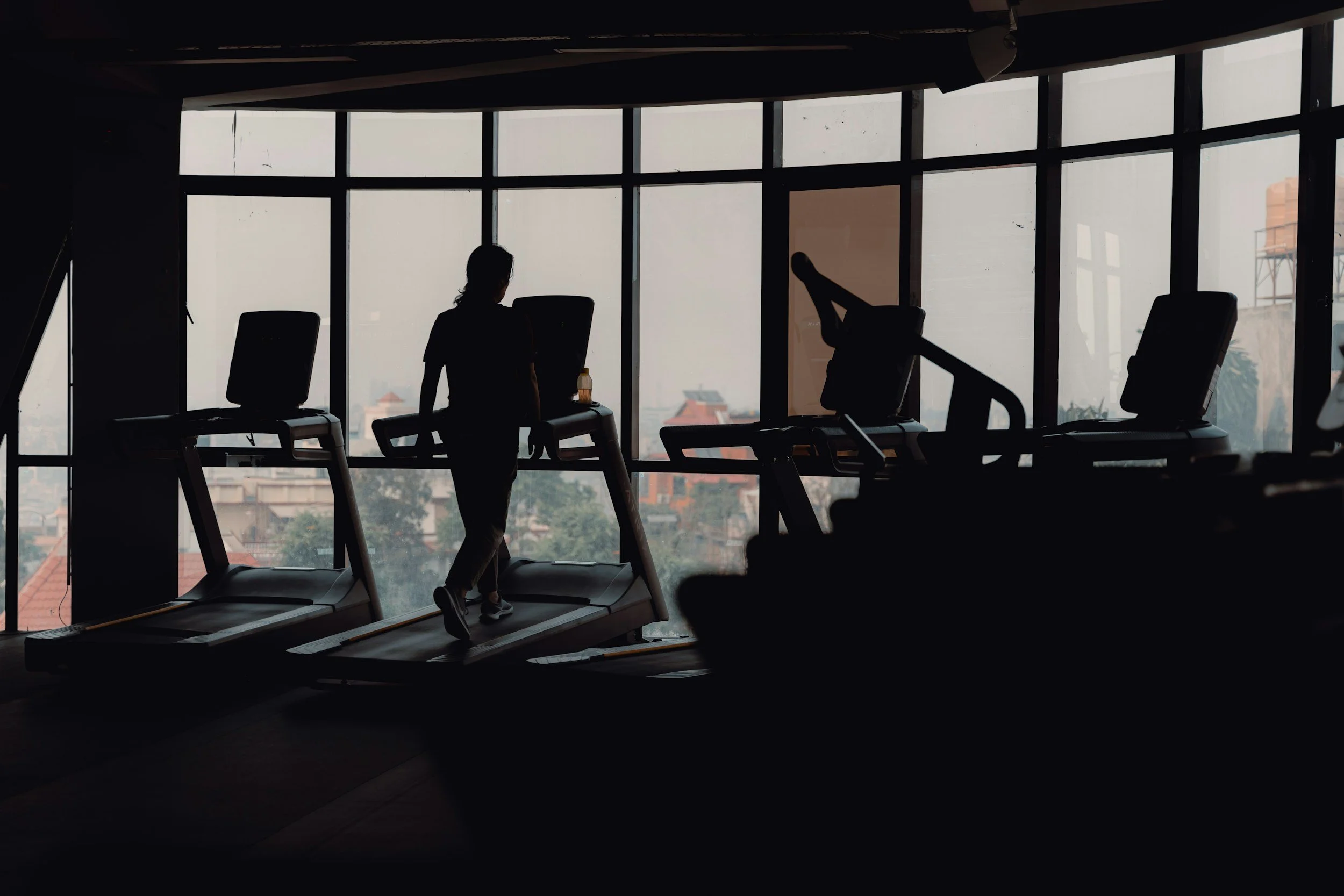
It became apparent too that the most valuable resource we have is time, when that became rarer- like in a recession – your capacity should be spent on the essentials. Exercise and activity ticks that box.
My friend is smart. She knows this and notes how she finds exercise mentally as well as physically purposeful, but like I did and as we all do, we tend to forget. Hearing this was the remainder she needed and this is also why choosing your friends wisely is important; iron sharpens iron.
She reminded me of something too. So far, in this proverbial Mount Everest, I thought when the routine dissipates and you’re back at ground zero that it was cruel how you’re left with nothing to show for past hard grit. The gains caveated by your commitment to consistency and in the absence, you lose all credit.
Gratefully, my friend highlighted that I was forgetting something- muscle memory. You do in fact retain something from that investment and so you can go again, again, but this time it will be quicker and easier to get back to the height you were at.
For instance, you learned to ride a bike as a kid and may not have done it in years. You try now you may be rusty but you’ll get the hang of it quickly. The motor memory is stored in your brain and the muscles have myonuclei within previously trained cells, it’s wonderful.
Starting again is indeed not the end of the world. Make activity a necessity again and experience flying again.
